Over the last few years, Environmental, Social, and Governance (ESG) metrics have moved from the periphery of compensation conversations to center stage. While ESG considerations are increasingly relevant for both public and private companies, the expectations, disclosure requirements, and stakeholder pressure differ significantly between the two. This article focuses primarily on public companies, where ESG has become a central component of executive pay.
From 2020 to 2023, the share of companies (including those in the S&P 500) that included at least one ESG metric in their executive incentive plans (primarily used in short-term incentive plans) increased from 52% to 76% in the U.S. and from 68% to 80% in Canada, according to Willis Towers Watson. This represents a clear sign of shifting expectations from investors, regulators, and employees in the past few years.
Even with changing economic and political pressures in the U.S., prevalence has remained stable. In fact, as of 2024, the prevalence did not change significantly and 77.2% of S&P 500 companies continued to include ESG metrics in executive pay plans, compared to 77.8% in 2023.
Today, companies are held accountable not only on their financial performance, but also on how that performance is achieved. Stakeholders want to know whether a company is reducing its environmental footprint, supporting an inclusive culture, and adhering to ethical governance standards. In response, compensation committees are holding leaders accountable for delivering not just profit, but purpose.
What’s Driving the ESG Shift?
Several converging forces are accelerating the adoption of ESG-linked compensation:
- Investor expectations: Institutional investors such as BlackRock & Vanguard are increasingly tying proxy votes to companies’ ESG performance. Shareholder advisory firms like Glass Lewis have also started scrutinizing ESG metrics in pay plans, creating pressure for boards to act.
- Regulatory action: Regulatory bodies are no longer passive observers. The EU’s Corporate Sustainability Reporting Directive (CSRD), the SEC’s proposed climate disclosure rules, and Canada’s guidance on modern slavery reporting are just a few examples of how regulators are pushing for transparent, auditable ESG outcomes.
- Workforce and consumer demand: ESG isn’t just an investor issue, it’s also a talent and brand issue. Employees, especially younger generations, are more likely to be attracted to, and want to stay with, companies that align with their values. Consumers are also interested in putting their dollars behind companies that demonstrate environmental responsibility.
What Kind of ESG Metrics Are Being Used?
While the specific ESG priorities vary by sector, most companies focus on three core pillars:
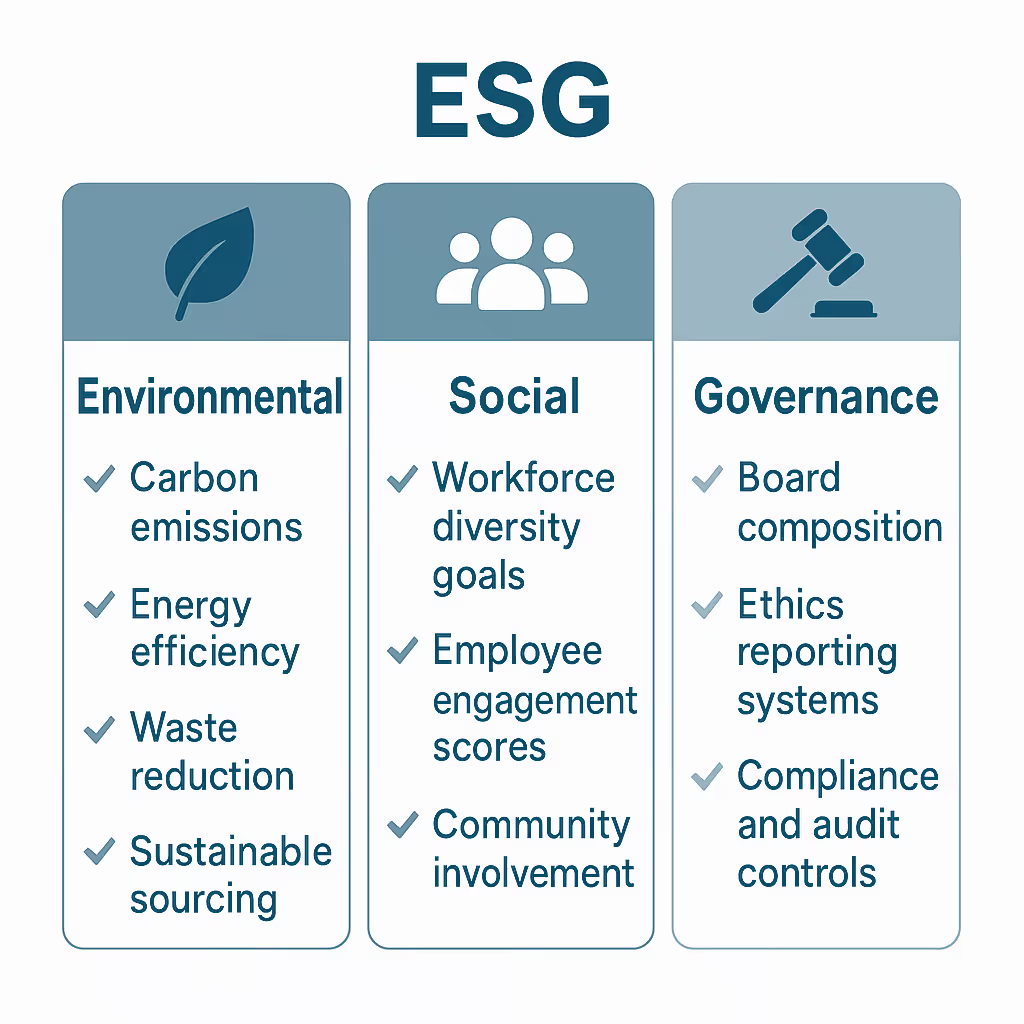
- Environmental: These metrics often include targets for carbon emissions (Scopes 1, 2, and sometimes 3), energy use, water consumption, waste reduction, and sustainable sourcing. Scope 1 refers to direct emissions from company operations; Scope 2 includes indirect emissions from purchased energy; and Scope 3 covers other indirect emissions.
- Social: Common measures include workforce diversity representation, employee engagement survey scores, safety performance, and community investment. In the U.S., however, the prevalence of DEI-specific metrics in executive compensation has recently declined. The share of S&P 500 companies tying pay to DEI dropped from 52% in 2024 to 22% in 2025, reflecting both political scrutiny and a shift toward broader human capital measures.
- Governance: This pillar typically covers ethics hotline usage and resolution rates, internal audit results, and policy compliance metrics.
The median weighting of ESG metrics in executive incentive plans is about 20% in Europe, the U.S., and Asia Pacific, and slightly higher, at 25%, in Canada.
Some organizations opt for precise numerical targets, for example, reducing Scope 1 emissions by 15% year-over-year, while others use milestone-based goals, such as implementing a company-wide renewable energy program or achieving a recognized sustainability certification.
Design Challenges for Compensation Teams
With ESG now common in many executive incentive plans, compensation professionals face complex design decisions:
- Should ESG goals sit within short-term incentive plans, long-term incentive plans, or both?
- Which roles within the organization should have their compensation directly tied to specific ESG outcomes?
- What’s the appropriate weighting relative to financial KPIs like EBITDA or revenue growth?
- How do we ensure these goals are substantive and defensible and not merely symbolic or trendy?
There’s also a risk of greenwashing (i.e., saying that a company is doing more to protect the environment than it is) if goals are vague or if performance is difficult to verify. To maintain credibility, goals must be auditable and tied to material business outcomes or strategic plans. This is particularly important in the U.S., where there is an increase in political and investor scrutiny on including metrics that aren’t tied to business goals.
ESG Practices from Leading Companies
Several companies are pioneering ESG integration in ways that balance ambition with accountability. These organizations show that ESG metrics can be embedded in performance management systems without compromising business results. For example:
- Danone was among the first global firms to receive “Entreprise à Mission” status, embedding social and environmental goals directly into its corporate mission and executive rewards.
- Microsoft links a portion of executive compensation to progress on carbon emissions and diversity representation.
Looking Ahead: ESG Metrics Seem to Be Here to Stay
The integration of ESG into executive compensation marks a broader evolution in how organizations define leadership and success. No longer is value creation measured solely by shareholder return. Companies are now expected to deliver outcomes that benefit multiple stakeholders, including employees, communities, and the planet.
For compensation professionals, this shift presents both a challenge and an opportunity. The challenge lies in designing ESG metrics that are:
- Material to the business
- Measurable, defensible and auditable
- Aligned with the organization’s strategy and value creation
The integration of ESG into executive compensation reflects a broader shift in how leadership is measured. Financial results still matter, but so do sustainability, ethics, and social impact. Despite ongoing uncertainty and political debate in the U.S., the use of ESG metrics in executive pay has held steady, indicating that these measures are becoming a durable feature of compensation design rather than a temporary trend.
Done well, ESG-linked compensation can reinforce accountability, guide behavior, and help organizations deliver on their purpose. For compensation teams, the challenge is to incorporate ESG metrics that are meaningful, measurable, and aligned with strategy.
As expectations continue to evolve, this is an opportunity to shape pay programs that reflect not just where the business is going, but also what it stands for. In markets like the U.S., where ESG has come under sharper regulatory scrutiny, companies that anchor their programs in clear, defensible practices, rather than chasing shifting trends, are best positioned to maintain credibility and balance stakeholder expectations with practical realities.

Hannah is the Vice President, Client Strategy & Consulting at White & Gale, a leading compensation consulting firm specializing in building progressive and equitable total rewards strategies. With over a decade of experience in compensation design, human resources, and pay strategy development, Hannah has a proven track record of guiding organizations to design and implement compensation processes and programs. Her expertise includes compensation philosophy, job evaluation, pay analysis, pay equity, executive compensation, sales incentive design and the assessment of total rewards programs.