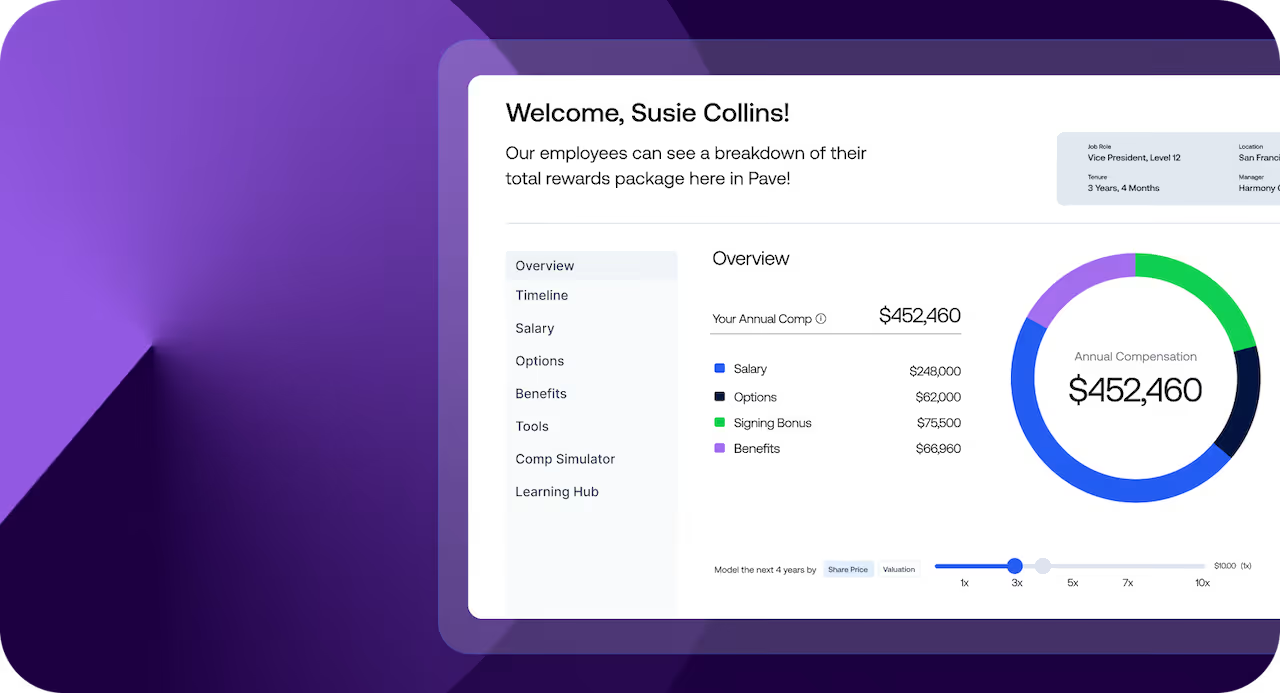
Today’s HR leaders know compensation is no longer just about paychecks. Employees expect to understand the full value of what they earn—and employers who fail to communicate that value clearly are putting engagement, retention, and trust at risk.
That’s where a modern, employee-centric total rewards statement becomes a strategic advantage. When well-designed, total rewards statements help employees see how base pay, benefits, equity, and non-monetary rewards fit together into a compelling, competitive package. When poorly designed, they become static, outdated PDFs the moment they arrive—skimmed once, then forgotten.
Here’s how forward-thinking HR organizations are reimagining total rewards statements—and how you can design statements employees truly value.
The Problem: Employees Don’t See the Full Picture
Even after a pay increase, many employees still question whether their pay is fair. In a world of persistent inflation, pay transparency, and constant benchmarking on platforms like Levels and LinkedIn, employees are forming opinions based on incomplete and often incorrect information.
The result? A rewards perception gap.
Many organizations offer competitive benefits, strong retirement contributions, and meaningful equity—but employees still anchor on base salary alone. Equity compensation remains opaque, making it difficult for employees to visualize vesting schedules or potential future value. Lacking context, the rest of your carefully constructed rewards package fades into the background.
A total rewards statement can close that gap—but only if it’s designed around employee needs, not just internal reporting requirements. HR leaders who get this right move from transactional communication to strategic impact.
What Employees Actually Want From Total Rewards Statements
Employee-centric design starts with a simple question: What information helps employees feel informed, valued, and confident in their compensation?
Research from SHRM and other sources consistently shows that employees care most about:
- Clear, simple view of their total compensation value (not just base pay)
- Employer-paid benefits, especially health insurance
- Paid time off, shown in a way that feels tangible and personalized
- Retirement and equity contributions, explained in plain language and visualized to show potential future value
Yet many total rewards statements over-index on what’s easy to calculate while under-communicating what employees find most meaningful.
An effective statement prioritizes relevance over completeness—giving employees what matters most, not just everything that’s easy to calculate.
Principles of an Employee-Centric Total Rewards Statement
1. Make the Value Obvious at a Glance
Employees should be able to answer one question in under 30 seconds:
“What is my total rewards package really worth?”
This means leading with a clear summary that shows total compensation up front—not burying key numbers on page five. Visual hierarchy matters. Employees shouldn’t need a finance degree to understand what you’re sharing.
2. Translate Non-Monetary Benefits Into Meaning
Not everything needs a dollar sign to be valuable.
For benefits like PTO, flexibility, or wellness programs, context matters more than precision. Comparisons (e.g., industry averages or market norms) help employees understand how their benefits stack up—even when exact monetization isn’t possible.
Just as importantly, these statements offer another opportunity to raise awareness of specific benefits, encourage employees to enroll or participate, and deepen their understanding of the true value your organization provides.
3. Personalize the Experience
Employees want to see their data: their equity with interactive vesting timelines, their benefit elections, and their growth over time—fully tailored by role, location, and compensation program. Personalization reinforces that compensation isn’t theoretical—it’s real and tailored to the individual. Personalized total rewards statements also empower employees to discuss their compensation confidently with spouses, significant others, or financial advisors, making their total rewards package easier to understand, share, and plan for.
4. Keep It Digestible and Dynamic
If your total rewards statement looks and feels like a compliance document, employees will treat it like one—and you miss the opportunity to build real connection and trust.
Modern statements should be:
- Easy to navigate
- Updated regularly
- Accessible year-round—not just during comp cycles
Always-on, real-time access enables HR teams to keep information current and relevant as employees' roles and rewards evolve, transforming a one-time document into a self-service destination employees return to.
5. Manager Enablement
Modern total rewards portals don't just serve employees—they equip managers with team-level visibility to lead confident compensation conversations. When managers can see their team's total rewards context, they're better prepared to discuss pay, explain equity value, and reinforce your compensation philosophy and cycle outcomes.
Why Total Rewards Statements Drive Engagement (Not Just Awareness)
When employees understand their total rewards, something powerful happens: trust increases.
Clarity reduces uncertainty, and transparency reduces suspicion. Employees who feel informed are more likely to stay engaged, recommend your company, and make thoughtful career decisions within your organization.
In other words, total rewards statements aren’t just a communication tool—they’re a lever for retention, engagement, and performance that HR leaders can pull.
"When it comes to pay, Pave is now the single source of truth for our employees, and feedback has been overwhelmingly positive. In the many years I've been here, this is the first time I've seen our employees in water cooler chats and Slack channels saying, ‘This is absolutely awesome.' This never happens with HR tools. Pave is a big success for us."
— Elle Xing, Director of Compensation, Dropbox
Designing Total Rewards for the Modern Workforce
As compensation strategies become more complex—blending cash, equity, benefits, and long-term incentives—communication can’t be an afterthought. It’s time for HR to bring the same creativity and intentionality to compensation communication as we do to program design.
Employee-centric total rewards statements bring structure, clarity, and credibility to your compensation philosophy. They help employees see not just what they’re paid, but why—and they reinforce the trust and transparency that are the hallmarks of high-performing HR teams.
At Pave, we believe compensation decisions deserve the same rigor, transparency, and usability as the rest of your people strategy. Total rewards statements are one of the most powerful ways HR can make that belief tangible—for every employee.
Curious how leading HR teams are rethinking compensation communication? Discover how Pave’s Total Rewards Portal gives every employee a personalized, always-on view of their complete compensation package.

Charles is a member of Pave's marketing team, bringing nearly 20 years of experience in HR strategy and technology. Prior to Pave, he advised CHROs and other HR leaders at CEB (now Gartner's HR Practice), supported benefits research initiatives at Scoop Technologies, and, most recently, led SoFi's employee benefits business, SoFi at Work. A passionate advocate for talent innovation, Charles is known for championing data-driven HR solutions.
What is a total rewards statement?
A total rewards statement is a personalized document that shows employees the full value of their compensation package, including base pay, bonuses, equity, benefits, retirement contributions, and non-monetary perks. It's designed to help employees understand what they earn beyond just their paycheck.
Why do employees undervalue their compensation?
Most employees anchor on base salary because it's the most visible number. Benefits like employer-paid health insurance, retirement matching, and equity grants are often poorly communicated or not communicated at all—creating a perception gap between what employees actually receive and what they think they receive.
What should a total rewards statement include?
An effective total rewards statement should include base salary, variable pay and bonuses, equity compensation with vesting timelines, employer-paid benefits with monetary values, paid time off, retirement contributions, and any additional perks or wellness programs. The most impactful statements lead with total compensation value and personalize the data by role, location, and benefit elections. See how Pave's Total Rewards Portal brings this to life.
How often should total rewards statements be updated?
Best practice is moving from annual static PDFs to always-on, real-time digital portals that employees can access year-round. This keeps information current as roles, benefits, and compensation evolve throughout the year—not just during comp cycles. Pave's Total Rewards Portal is designed for exactly this kind of always-on access.
Do total rewards statements improve retention?
Yes. When employees clearly understand the full value of their compensation, trust increases, uncertainty decreases, and they're more likely to stay engaged and make informed career decisions within the organization rather than leave due to incomplete salary comparisons.
How do total rewards statements support managers?
Modern total rewards portals give managers team-level visibility into compensation, equipping them to lead confident pay conversations, explain equity value, and reinforce the organization's compensation philosophy during reviews and merit cycles.